
Dental treatment under general anesthesia Warsaw
Dental treatment under general anesthesia opens a completely new chapter in dentistry – it allows for painless, comfortable, and fast performance of even the most complex procedures in a full sense of security. For many people who have so far avoided the dentist due to fear, hypersensitivity, or bad experiences, anesthesia becomes an opportunity for a healthy smile without stress and traumatic memories.
Find out what modern dental treatment under general anesthesia looks like and why more and more patients in Warsaw are choosing this method.
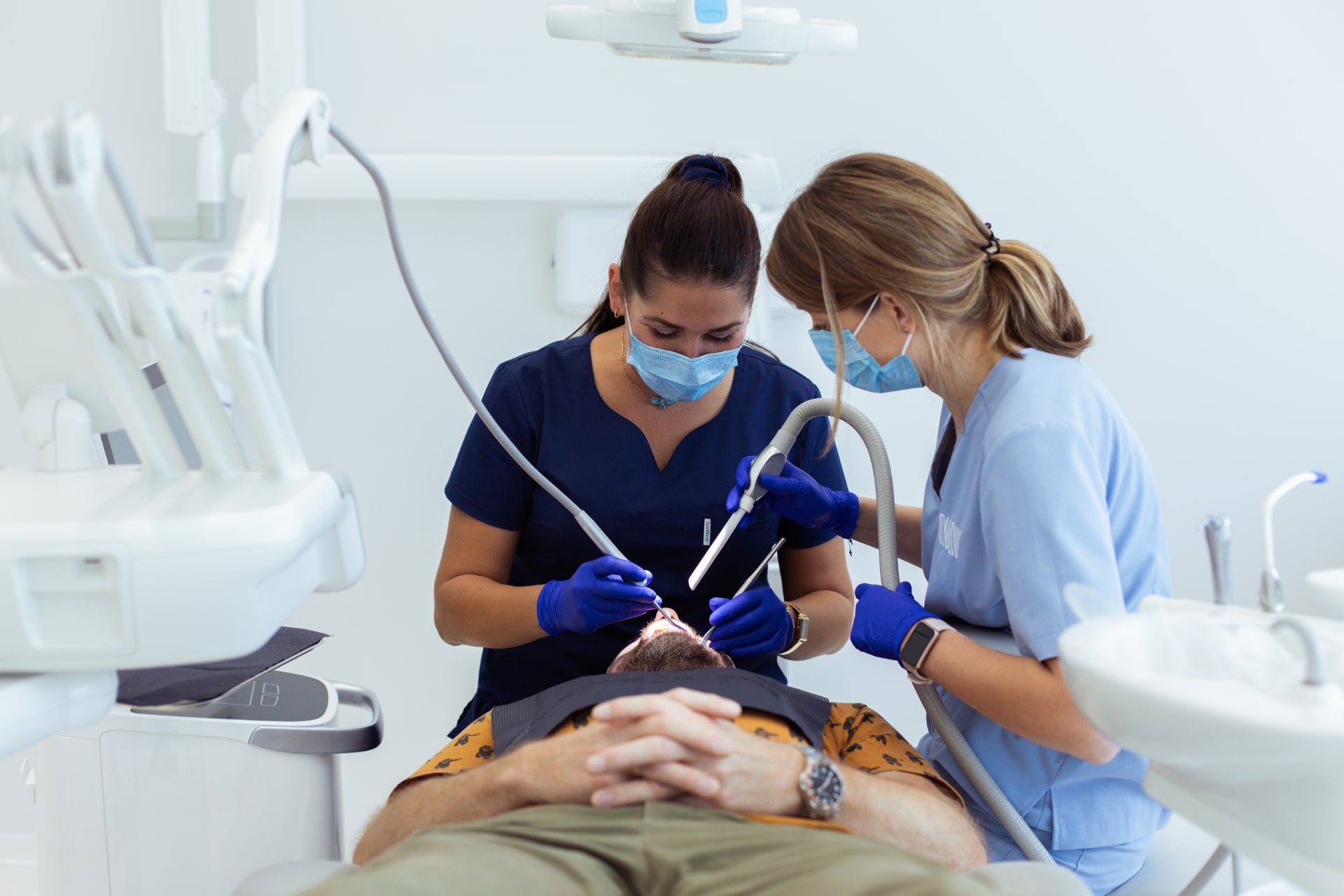
What dental procedures do we perform under general anesthesia?
Dental treatment under general anesthesia is a solution for patients who require special care or need to undergo extensive procedures in a short time. During one visit, it is possible to perform many procedures, which significantly shortens the entire treatment process and eliminates the need for multiple visits to the office.
Each procedure is performed by an experienced team of dentists and anesthesiologists who care for the patient’s safety and comfort at every stage of treatment.
01 Tooth extractions
Removal of single, multi-rooted, or impacted teeth, including problematic wisdom teeth, without pain or stress.
02 Cavity treatment
Comprehensive oral health restoration, filling cavities, and tooth reconstruction in conditions of full comfort.
03 Root canal treatment
Endodontics under general anesthesia allows for precise and painless treatment of even several teeth during one session.
04 Surgical procedures
Resections, frenuloplasty, treatment of inflammation, and other procedures requiring longer working time.
05 Dental implants
Placing dental implants in conditions of total loss of consciousness of the patient.
06 Sinus lift and bone regeneration
In a situation where the amount of bone is insufficient for implant placement, we perform bone regeneration procedures and maxillary sinus lift. Thanks to this, even in difficult cases, dental implants can be applied.
07 Treatment of children and people with disabilities
The possibility of performing full oral health restoration in children and in patients with whom contact or cooperation is difficult.
How does dental treatment under anesthesia work in our clinic?
The process of treatment under general anesthesia is carefully planned and consists of several stages that guarantee safety and predictability of effects.
01
Consultation and qualification
The first step is a detailed dental-anesthesiological consultation, during which the patient’s health condition is assessed, necessary tests are performed, and the treatment plan is discussed. The anesthesiologist analyzes the medical history, allergies, and medications taken to exclude contraindications for general anesthesia.
02
Preparation for the procedure
The patient receives detailed preparation instructions – including the need to remain fasting for a specific time before the procedure and restrictions on fluid and medication intake. On the day of the procedure, the patient is admitted to the clinic and prepared by the medical team.
03
Induction of anesthesia
The anesthesiologist administers anesthetic drugs intravenously or by inhalation, constantly monitoring the patient’s vital parameters. Depending on the scope of the procedure, it may be necessary to secure the airway (e.g., via intubation or a laryngeal mask).
04
Performing dental treatment
While the patient is in a deep sleep, the dentist performs the planned procedures – from conservative treatment to endodontics, surgery, and implantology. An anesthesiologist and an anesthetic nurse monitor safety at all times.
05
Awakening and observation
After the procedure, the patient is gradually awakened and remains under the observation of medical staff until full recovery of consciousness. After a few hours, if the health condition is stable, they can leave the clinic accompanied by a caregiver.
06
Post-operative instructions and control
The patient receives detailed recommendations on how to proceed after the procedure and schedules a follow-up visit to evaluate healing and treatment effects.
Why choose dental treatment under anesthesia at our clinic in Warsaw?
Dental treatment under general anesthesia is a solution that carries a number of benefits – for both patients and doctors.
Total lack of pain and stress
The patient does not feel any unpleasant stimuli and does not remember the course of the procedure, which eliminates fear and trauma associated with visiting the dentist.
Possibility of performing many procedures during one visit
Treatment under anesthesia allows for comprehensive oral health restoration in a short time, without the need for many visits.
Ideal solution for people with dentophobia, disabilities, and children
General anesthesia enables effective treatment even in the most difficult cases, where other methods fail.
High standard of safety
Procedures are performed by a qualified anesthetic and dental team, using modern equipment and under constant monitoring of the patient’s vital parameters.
Reduction of treatment time
The ability to perform several procedures during one session means a faster return to health and normal functioning.
Individual approach and empathy
We care about the comfort of each patient, answer all questions and dispel doubts at every stage of treatment.
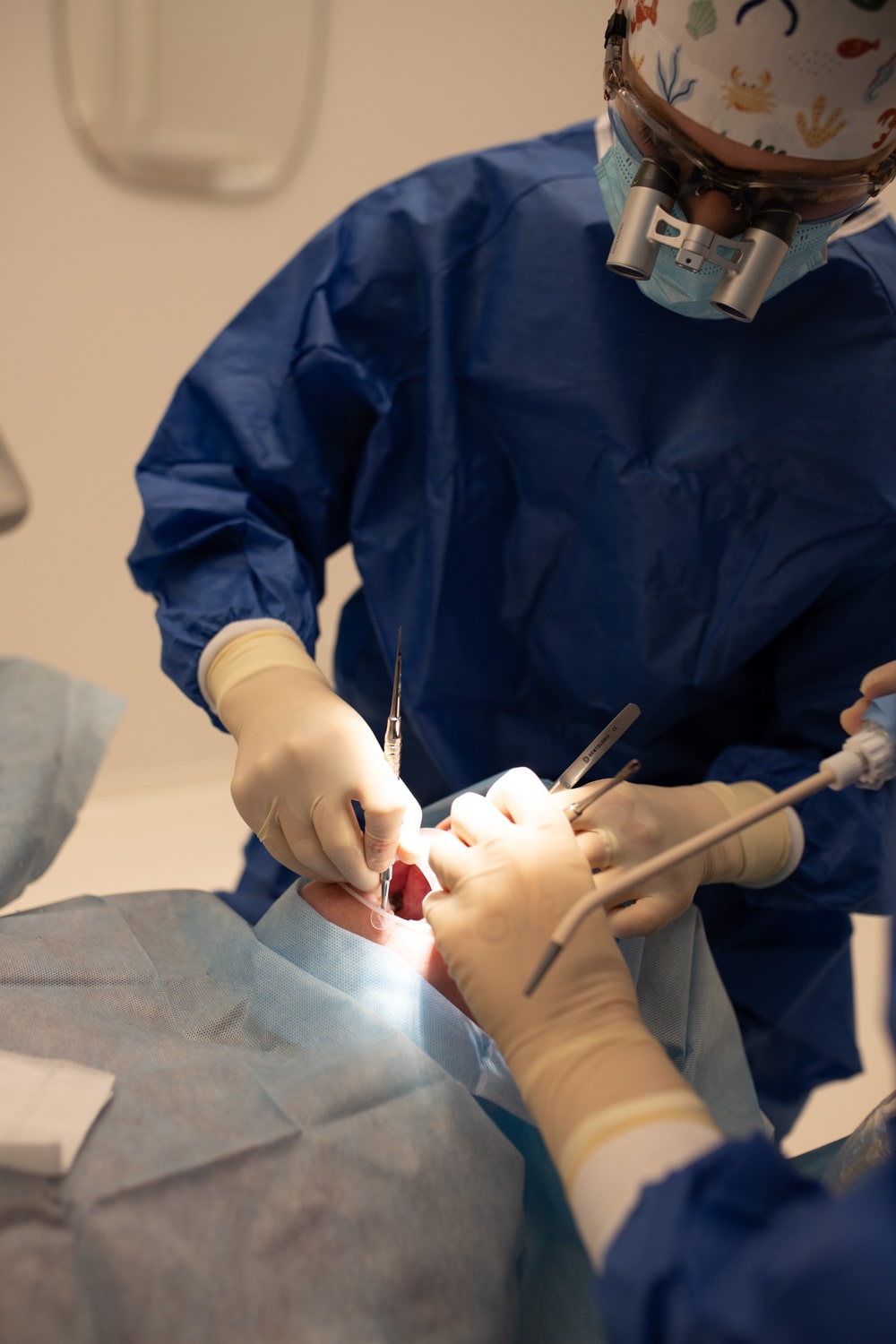
Cennik leczenia zębów pod narkozą w Warszawie
Koszt leczenia zębów pod narkozą zależy od długości trwania znieczulenia oraz zakresu przeprowadzanych zabiegów. Podstawą ceny jest wprowadzenie i utrzymanie pacjenta w stanie narkozy. Do ceny znieczulenia należy doliczyć koszt wykonanych procedur stomatologicznych, takich jak ekstrakcje, leczenie próchnicy, endodoncja czy implanty. Szczegółowy kosztorys przygotowujemy indywidualnie podczas konsultacji, aby pacjent miał pełną jasność co do wydatków związanych z leczeniem.
- Pierwsza godzina leczenia
- Kolejne 30 minut
Poznaj naszych specjalistów wykonujących leczenie zębów pod narkozą
Nasz zespół tworzą doświadczeni stomatolodzy oraz anestezjolodzy, którzy posiadają szeroką wiedzę i praktykę w prowadzeniu zabiegów w znieczuleniu ogólnym. Dzięki współpracy interdyscyplinarnej możemy zaoferować kompleksową opiekę nawet w najbardziej wymagających przypadkach.



FAQ
Najczęściej zadawane pytania o leczenie zębów pod narkozą
Implantologia budzi wiele pytań – poniżej znajdziesz odpowiedzi na te, które pojawiają się najczęściej. Jeśli masz dodatkowe wątpliwości, chętnie rozwiejemy je podczas konsultacji.
01 Kto może skorzystać z leczenia zębów pod narkozą?
Leczenie pod narkozą jest rekomendowane osobom z silną dentofobią, dzieciom z zaawansowaną próchnicą, osobom z niepełnosprawnościami, pacjentom wymagającym rozległych zabiegów oraz tym, u których tradycyjne znieczulenie jest nieskuteczne lub przeciwwskazane.
02 Jakie są przeciwwskazania do leczenia zębów pod narkozą?
Do głównych przeciwwskazań należą ostre infekcje dróg oddechowych, zaburzenia krzepliwości krwi, niektóre choroby przewlekłe (np. niewyrównana cukrzyca, padaczka), alergie na leki anestetyczne oraz inne indywidualne schorzenia oceniane przez anestezjologa podczas kwalifikacji.
03 Czy leczenie zębów pod narkozą jest bezpieczne?
Tak, pod warunkiem przeprowadzenia szczegółowej kwalifikacji i wykonania zabiegu przez doświadczony zespół medyczny. Podczas całego procesu anestezjolog stale monitoruje parametry życiowe pacjenta i reaguje na wszelkie nieprawidłowości, co minimalizuje ryzyko powikłań.
04 Jak długo trwa wybudzenie po narkozie i kiedy można wrócić do domu?
Wybudzenie następuje zwykle w ciągu kilkunastu minut po zakończeniu zabiegu, jednak pacjent pozostaje pod obserwacją przez kilka godzin. Do domu można wrócić w towarzystwie opiekuna, gdy lekarz uzna, że stan zdrowia jest stabilny. W dniu zabiegu nie należy prowadzić pojazdów ani wykonywać czynności wymagających pełnej koncentracji.
05 Czy po leczeniu zębów pod narkozą mogę od razu normalnie funkcjonować?
Po zabiegu zaleca się odpoczynek i unikanie wysiłku fizycznego przez resztę dnia. Możliwe są przejściowe objawy, takie jak senność, osłabienie czy suchość w ustach, które ustępują w ciągu kilku godzin. Wszelkie szczegółowe zalecenia otrzymasz od lekarza podczas wypisu z kliniki.