
Tartar removal Warsaw
Tartar is not only an aesthetic problem, but above all a threat to oral health. Even with regular brushing and flossing, mineralized bacterial plaque can deposit in hard-to-reach places, leading to gum inflammation, tooth decay, and even tooth loss. At Nowak | Wołcz Dental Clinic in Ursynów, we offer effective and safe tartar removal, which helps restore health, freshness, and self-confidence every day.
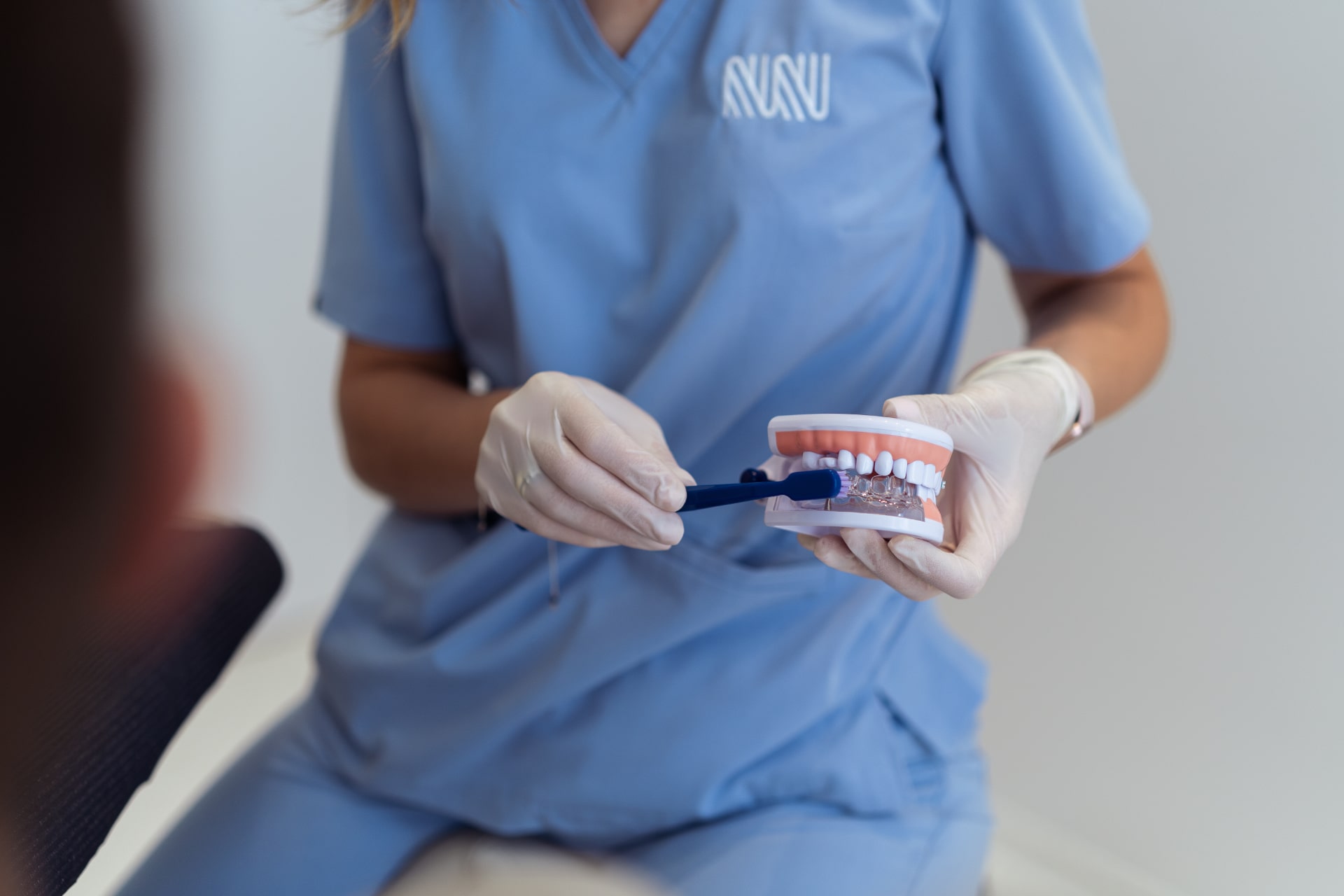
What is tartar and why is it worth removing?
Tartar is a hard, mineralized deposit formed from unremoved bacterial plaque under the influence of saliva components. It most often builds up around the tooth necks, between the teeth, and below the gum line. Its presence promotes bacterial growth, gum inflammation, bleeding, and bad breath. Untreated tartar leads to periodontitis, gum recession, and tooth loosening. Regular tartar removal is the foundation of prevention and a healthy smile.
Who should regularly remove tartar?
We recommend tartar removal to everyone – children, adolescents, and adults alike. It is particularly important for people with a tendency for rapid tartar buildup, smokers, patients with orthodontic appliances, implants, or periodontal diseases. Regular tartar removal is also essential before whitening treatments, prosthetic or surgical treatment, and for pregnant women, who are at an increased risk of gum inflammation.
01 Ultrasonic scaling
Modern scalers allow for quick and thorough removal of tartar even from hard-to-reach places.
02 Sandblasting and polishing
After tartar removal, the teeth are thoroughly cleaned and polished, which restores their natural shine and makes it difficult for deposits to build up again.
03 Fluoridation
The application of fluoride preparations after scaling strengthens the enamel and reduces the risk of sensitivity.
What does the tartar removal procedure look like?
01
Oral health assessment
The procedure begins with an assessment of the oral health and the individual needs of the patient.
02
Tartar removal
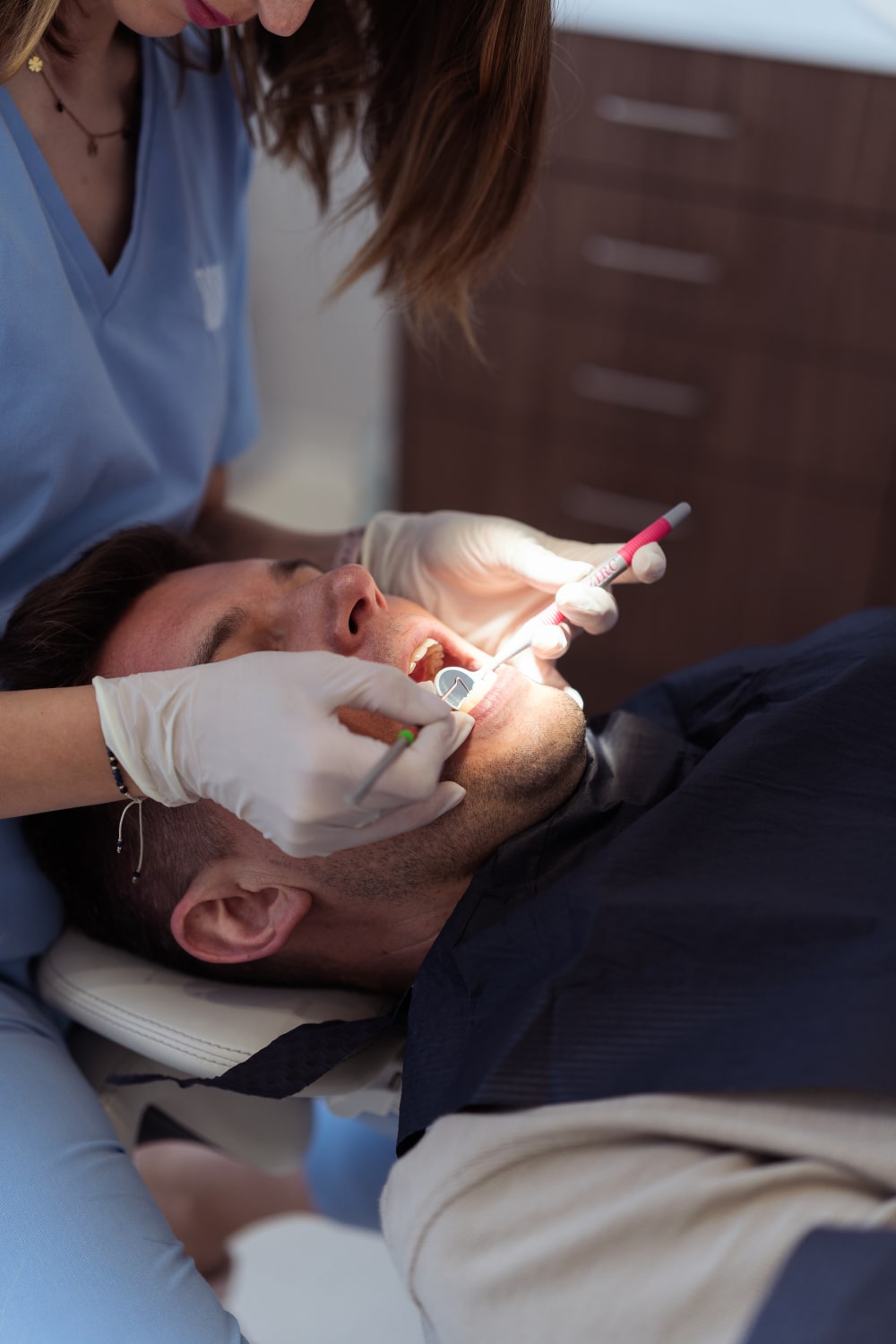
We perform tartar removal using modern ultrasonic scalers that effectively break up and eliminate hard deposits without damaging the enamel. The procedure is fast, painless, and does not require anesthesia – in the case of sensitivity, we can apply mild anesthetics.
03
Post-scaling treatments
After scaling, the teeth are sandblasted and polished, which smoothes the enamel and makes it difficult for plaque to build up again. Finally, we apply fluoridation, which strengthens the teeth and protects against decay.
Why is tartar removal so important?
Tartar removal brings a range of benefits that go beyond smile aesthetics:
Preventing gum disease
Regular tartar removal eliminates the main cause of inflammation, gum bleeding, and periodontitis.
Protection against decay
Clean teeth are less susceptible to bacterial growth and the formation of cavities.
Fresh breath and confidence
Removing deposits and bacteria makes your breath fresh and your smile more attractive.
Support for orthodontic and prosthetic treatment
The procedure is essential before applying braces, crowns, bridges, or implants, as well as during their use.
Early diagnosis
During the procedure, the hygienist can detect the first signs of decay, recession, or other problems, referring the patient to the appropriate specialist.
Cost of tartar removal at Nowak | Wołcz Dental Clinic Warsaw
The price of the procedure depends on the scope and frequency of the treatment and the individual needs of the patient. Each time we prepare a detailed cost estimate and discuss payment options.
- Dental hygiene / GBT protocol hygiene
Team of specialists in tartar removal at Nowak | Wołcz Dental Clinic
In our clinic, tartar removal procedures are performed by qualified hygienists and dentists who use the latest technologies and care for patient comfort at every stage. Each treatment is tailored to individual needs, and the entire process takes place in a friendly and stress-free atmosphere.
FAQ
Frequently asked questions about tartar removal
Tartar removal is one of the most common preventive treatments, but it still raises many questions. Here are the answers to those we most often hear from our patients:
01 How often should tartar be removed?
We typically recommend tartar removal every 6 months, but for people with a tendency for rapid deposit build-up, smokers, or patients with periodontal diseases, the treatment may be necessary even every 3–4 months.
02 Is tartar removal painful?
The procedure is usually painless, and any discomfort can be minimized thanks to modern scalers and optional local anesthesia.
03 Do teeth become more sensitive after tartar removal?
Temporary sensitivity may occur, especially if the deposits were extensive, but it usually subsides after a few days. Fluoridation after the treatment additionally protects the enamel and reduces sensitivity.
04 Can tartar removal damage the enamel?
Professionally performed scaling does not damage the enamel – modern devices act selectively on tartar without affecting healthy tooth tissue.
05Is tartar removal enough to prevent periodontitis?
Tartar removal is a key element of prevention, but daily oral hygiene, regular check-ups, and a healthy diet are equally important. In the case of advanced periodontal diseases, additional periodontological treatments may be necessary.